

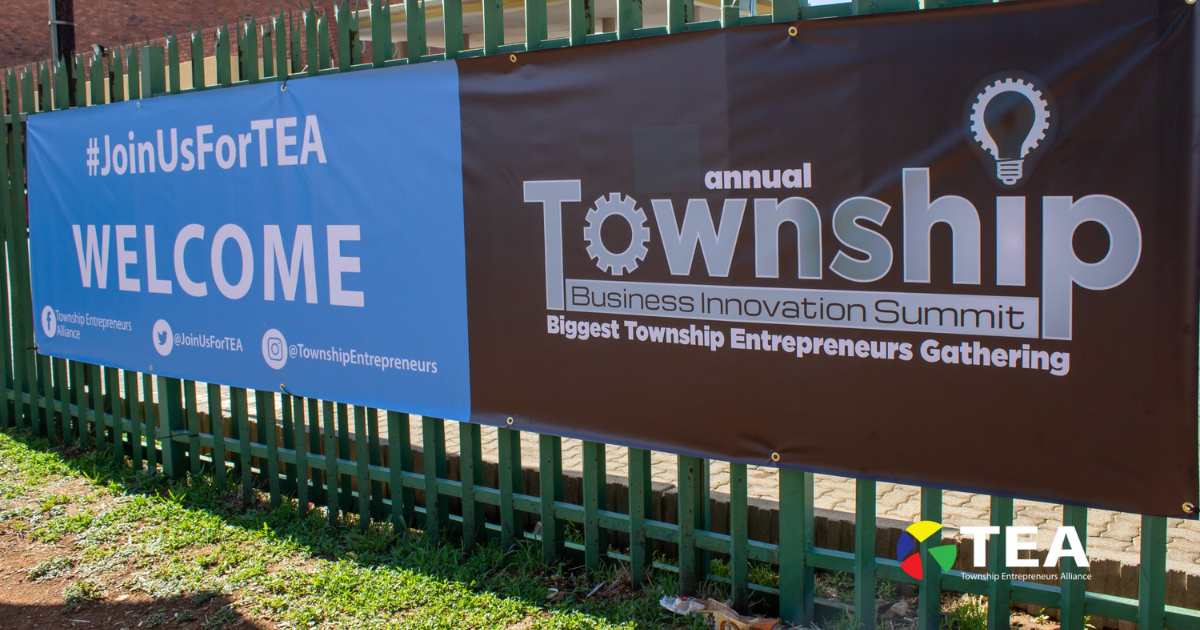
In a hall full of entrepreneurs at the annual Township Economy Summit in Tembisa, attendees were not merely businesses looking to network, but what filled the room was evidence of community. SME South Africa sat down with the township entrepreneur guru to get deeper insight into who Bulelani Balabala is and what he does.
As the founder of Township Entrepreneurs Alliance (TEA), he’s spent many years building a platform that gives township business owners a fair shot at success.
The Humble Start That Sparked a Movement
“I wasn’t born with a business plan,” says Balabala. In 2005, he registered his company, Intercessor Army Franchising. What inspired the name was not because he planned to supply army gear, but because he believed in filling a gap, a principle shaped by his upbringing in a church, where intercession meant standing up for others.
Back then, his resources were limited, and he relied on patching all the resources he could get his hands on to reach a goal. Old church chairs, discarded tabletops from neighbours, crates from supermarket deliveries, and even bricks to raise the table height. He cobbled together a makeshift café using whatever he could find and whoever was willing to help. “Every part of that café,” he says, “came from people who believed in the dream before the dream believed in itself.”
This, to Balabala, is the real starting line for most township entrepreneurs. There’s no large stack of cash, no flashy offices, and no big loans. All that’s there is community, grit and imagination.
A Nation-Wide Gathering of Hustle and Hope
This year’s Township Economy Summit brought together entrepreneurs from different parts of the country. “All the noise we make here is not for vanity,” he says. “Whenever we host training, mentorship sessions, summits, or similar events, I always ask: can we shift how we measure impact? Instead of focusing on vanity metrics, we should ask whether someone, in the long term, takes this knowledge and uses it to build a business that truly leads an industry. Captains of industry are not the thousand people in the room, they’re the ones who take action and make real change.”
The summit covers six tracks, which are:
- Enterprise development
- Manufacturing
- Spaza shops and township retail
- Green economy
- ICT and digital‑business transformation
- Innovation + market access + funding + scaling.
Through these tracks, township business owners get access to real tools. Insights, networks, funding leads, and mentorship.
Real Advice: Entrepreneur to Entrepreneur
1. Start With What You Have
“Look at the resources around you,” Balabala advises. “If you live in your mother’s house, is there a garage, a fridge, a stove? What can you actually use, and when can you use it?”
He shares a personal example: “For me, if there was a bucket and a mop, and my mother didn’t mind me using them after 3 o’clock, I could wash cars. If she allowed me to use the stove — and the biggest concern was electricity — I could bake amaskans to raise some capital. It’s about starting small, using what’s available, and being resourceful.”
2. Do the Ego Test
Before diving in, Balabala stresses the importance of checking your motivations:
“Ask yourself: am I picking this because it fits an ego profile, or because it’s actually something I can do?” he says. “Sometimes people chase the hundred thousand, the million, before they even master the basics. Real growth happens in increments. It’s better to start small and scale up than to chase numbers that aren’t realistic yet.”
3. Exposure and Learning
“You need to expose yourself,” he continues. “Go watch people who are doing things better than you. Sit in a shop, observe a business, and learn how they operate. You don’t even have to talk to anyone at first, just absorb.”
This approach, he says, builds understanding and prepares entrepreneurs to scale without panic or ego, equipping them to handle bigger opportunities when they come.
4. Rejection is a Signal
Bulelani shifted the way we should look at rejection. “The sting of rejection never ever gets less,” he explains. The founder of TEA emphasises that the fact that you get a rejection letter is a signal that you’re putting yourself out there in the market. “If I’ve got people adjudicating applications, they’ve seen mine, they’ve shortlisted mine, and if they decline me, they know me. So, when other opportunities come up, now they know what I have, and I own a piece of real estate in their brains unbeknownst to them,” says Balabala.
“Mr Get It Done”
Over the years, Balabala gained the name “Mr Get It Done”. “This name was actually given to me by DJ Sbu, who’s like a big brother to me. Many years ago, we grew up in the same neighbourhood, he explains.
“Back then, I used to volunteer at his organisation, helping wherever I could, supporting initiatives, and making sure things ran smoothly. DJ Sbu noticed my work ethic and my commitment to making sure things happen, and he started calling me “Mr Get Things Done.”
Over time, the name stuck, and it became part of who Balabala is today, serving as a reminder of his responsibility to always follow through, to always serve his community, and to always push for progress.
What’s Next for Township Entrepreneurs?
Townships are not problems to be fixed. They are soils to be planted. Through mentorship, markets, and perseverance, countless ventures, from spaza shops to digital platforms, can grow from tiny businesses to sustainable ventures that have an impact.